Xbox's Multi-Platform Strategy: Halo & Gears of war coming to PlayStation & Switch?
As we move further into 2026, Xbox's multi-platform strategy, which began in earnest in 2024, has evolved from a series of rumors into a defining business model. The initial wave, which saw titles like Sea of Thieves, Grounded, Hi-Fi Rush, and Pentiment land on PlayStation and Nintendo Switch, was just the beginning. Now, with Forza Horizon 5 confirmed for PlayStation 5, the conversation has decisively shifted from 'if' to 'which beloved franchises are next?' For many, the answer seems obvious: the legendary pillars of Xbox's first-party lineup, Halo and Gears of War. Xbox leadership, including Phil Spencer, has consistently maintained there are no 'red lines,' making the prospect of Master Chief and Marcus Fenix appearing on rival consoles not just plausible, but increasingly logical.
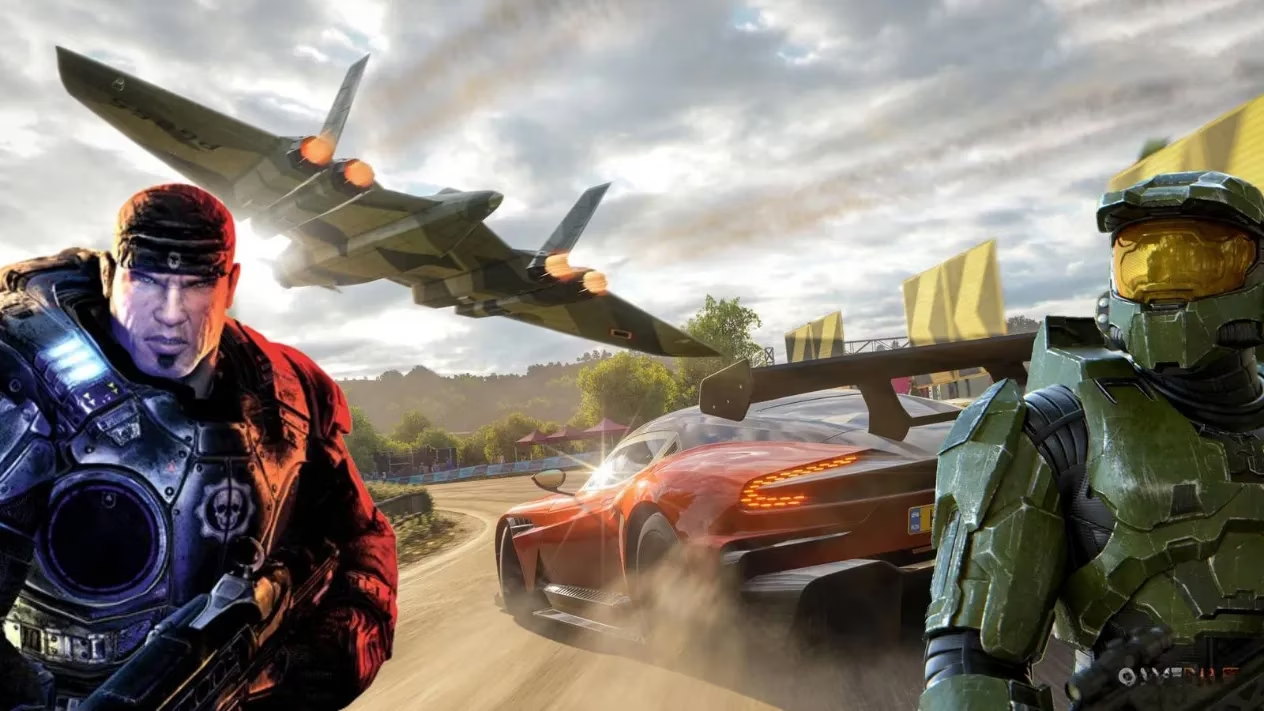
Recent industry chatter has only fueled this speculation. Just a few weeks ago, notable leaker Nate the Hate suggested Xbox has active plans to bring Halo: The Master Chief Collection to both PlayStation 5 and the upcoming Nintendo Switch 2. This claim found support from Windows Central's Jez Corden, who added that Gears of War is also in the pipeline for a PlayStation debut. While official announcements remain pending, the strategic reasoning behind such moves is compelling and multi-faceted.
Let's break down the business sense behind porting these iconic franchises:
🧠 Market Saturation & New Revenue Streams: Halo: The Master Chief Collection is over a decade old, containing games that are even older. The latest mainline Gears title is nearly six years old. On Xbox platforms, the core audience has largely already purchased these titles. Sales have inevitably plateaued. Porting them represents a low-effort, high-reward opportunity to tap into the massive, established player bases of PlayStation and Nintendo, creating a lucrative new revenue stream from legacy content.
🚀 IP Investment & Ecosystem Growth: This isn't just about selling old games. It's a long-term play for franchise growth. Introducing Halo and Gears to millions of new players on other platforms can revitalize interest in these IPs. Players who fall in love with the saga of Master Chief or the visceral combat of Gears on their PlayStation may be far more inclined to invest in Xbox hardware for the next exclusive installment. It's a brilliant funnel: use legacy titles as a gateway on other platforms to drive future ecosystem loyalty.
😲 The 'Strangeness' Factor & Brand Evolution: Yes, the mental image of Master Chief booting up on a PlayStation is initially jarring for long-time fans. That temporary 'strangeness,' however, is a small price to pay for the monumental benefits. Microsoft's goal is clearly to transform Xbox from a hardware-centric brand into a pervasive software and services powerhouse. Having its flagship franchises everywhere aligns perfectly with that vision.
The pattern is clear. The ports started with newer, live-service, or niche titles to test the waters. The confirmation of Forza Horizon 5, a flagship racing franchise, signaled a major escalation. Logically, the next step is the crown jewels. The commercial logic is airtight, and the rumor mill is in overdrive. For PlayStation and Switch players, 2026 could be the year they finally get to experience two of gaming's most iconic legacies firsthand. For Xbox, it's the final step in throwing the floodgates wide open, solidifying a future where great games are no longer bound by plastic boxes, but by the communities that love them.
Discussion