When 'Osama' Is a Banned Name: Gaming’s Hilariously Offensive Mishandling of Arab Identity
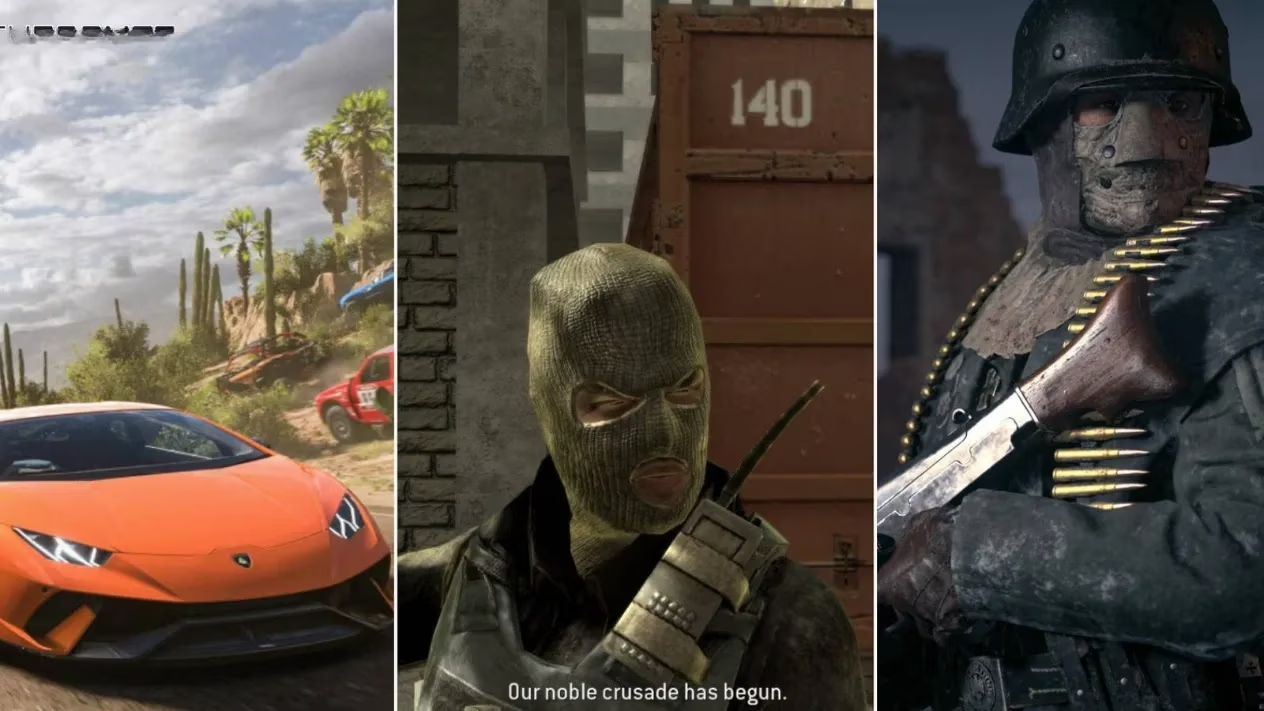
In 2026, a gamer named Osama boots up Forza Horizon 5 for a cozy evening of virtual racing. He gleefully customizes his license plate, only to be slapped with the dreaded "profanity filter" — because, apparently, his perfectly ordinary Arabic name triggers the same red alert as a four-letter swearword. It’s like showing up to a potluck with baklava and being told the dessert is a security threat. Years after the industry supposedly embraced diversity, Arab and Muslim representation still wobbles like a camel on a tightrope, blindfolded and holding a map printed in Klingon.
The saga of cultural faceplants in video games is a sprawling, almost comedic anthology of good intentions running headfirst into a brick wall labeled "Research? What’s that?" The recent past — think 2021, but the stench lingers — gave us Call of Duty: Vanguard sprinkling pages of the Quran across a battlefield floor, a faux pas that landed like a theological hand grenade. Then there was Arcane‘s climactic Arabic text, which looked less like poetry and more like a ransom note assembled by a cat walking across a keyboard: neither cursive nor even in the correct reading order. Meanwhile, Forza Horizon 5 quietly curated a blacklist that turned names like Osama, Nazih, and even Mohammed into digital contraband. One developer joked that the filter had the cultural sensitivity of a soggy falafel, but nobody was laughing in Riyadh.
Rami Ismail, the indie dev demi-god and co-founder of Vlambeer, once observed that the biggest shift wasn’t that games had gotten worse — they’d always been a hot mess of marginalization — but that the SWANA region (Southwest Asia and North Africa) had grown too large to ignore. “The market over there is growing rapidly,” he noted, which is industry-speak for “we suddenly noticed there’s money in them there hills, so maybe we should stop stepping on toes.” The result? Multinational behemoths trying to open regional offices while staring at a backlog of Arabic-language complaints they’d blissfully ignored because, well, who reads feedback anyway?
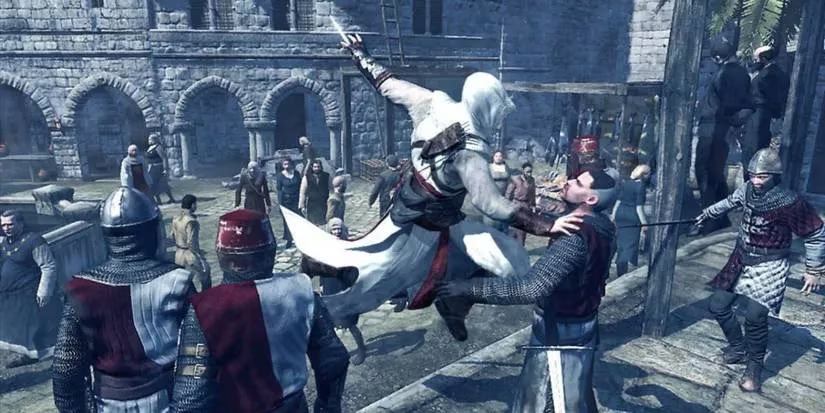
When Vanguard’s floor-based Quran scandal erupted, the response from the Call of Duty team was a masterclass in strategic apology gymnastics. They issued a statement — but exclusively on their Middle Eastern Twitter account, in Arabic. As Ismail pointed out, Muslim players outside the region, who make up the global majority, were left staring at a void. “It’s a very logical PR response. The backlash will mostly happen in Arabic, so they’re apologising only in Arabic not to notify anybody else that they’ve made a mistake,” he said. It was the corporate equivalent of whispering “sorry” into a pillow while hoping the rest of the house stays asleep. ✨
Now, imagine your name is Nazih. In the Western mind, that might look uncomfortably close to a certain historical tyrant, and thus it joins Osama on the no-fly list of Forza Horizon 5. Nazih Fares, head of localisation and communications at The 4 Winds, has been living this absurdity for years. “I had the same experience with PSN, when they started adding the real ID feature. My name is not allowed to be used in that instance, which makes no sense,” he explains. Having to type “Nazeeh” just to prove you exist is like being asked to spell your own name with a lisp because the machine thinks you’re trouble. “It’s not a compromise we should [need] in these modern times.” Especially when the same game pats itself on the back for adding pronoun options and colourblind modes — inclusivity is apparently a buffet where some dishes are mysteriously locked behind a velvet rope.
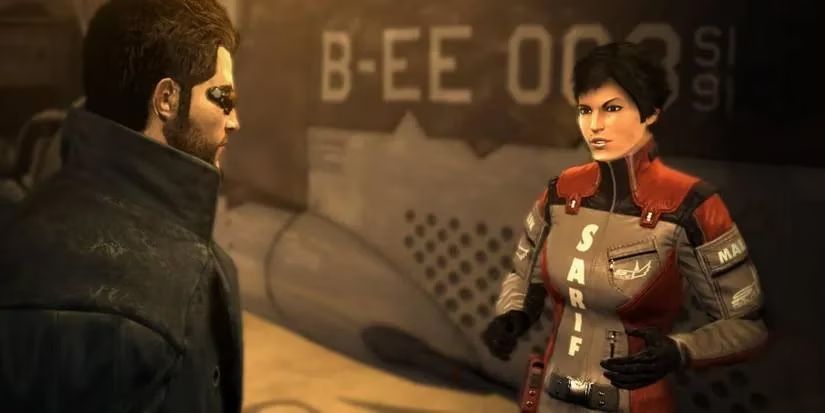
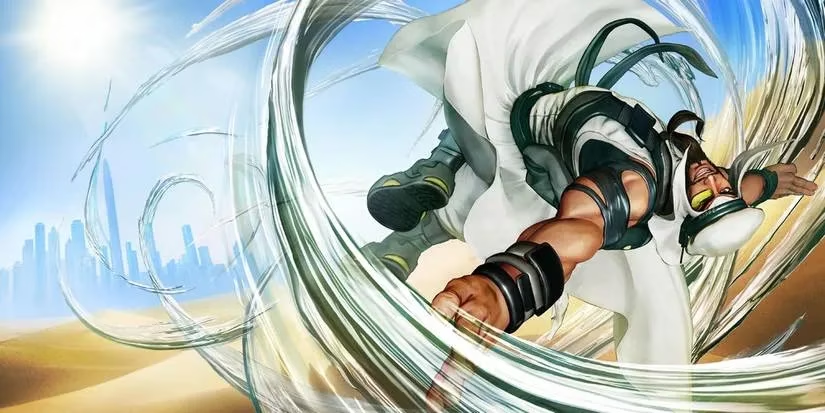
The root of the rot isn’t simple malice; it’s a cocktail of laziness and a Western gaze that oscillates between Dubai’s sci-fi towers and war-torn deserts like a broken metronome. Fares puts it starkly: “The Western approach of looking at the Middle East is, ‘I’ve been to Dubai - I’ve seen these towers and this weird utopia’ or ‘I heard of the Middle East, my brother served in Iraq.’ There’s nothing in between talking about the positivity of the changes.” The industry’s mental map of the Arab world is a dusty postcard with “insert bombs or opulence here” scribbled in the margin. 🐪
Robin, a Triple-A developer speaking under a pseudonym (probably because naming names in this industry is like juggling scorpions), offers a more forgiving diagnosis: the banned-name list for Forza Horizon 5 was likely an ancient Microsoft database dragged into daylight without a second thought. “I think they extrapolated a banned names list that has existed within the Microsoft database for a while and they just implemented it without checking,” they say. The result is a filter that treats “Mohammed” — literally the most common name on the planet — like a dirty word. It’s the programming equivalent of a museum using a caveman’s fire as its heating system.
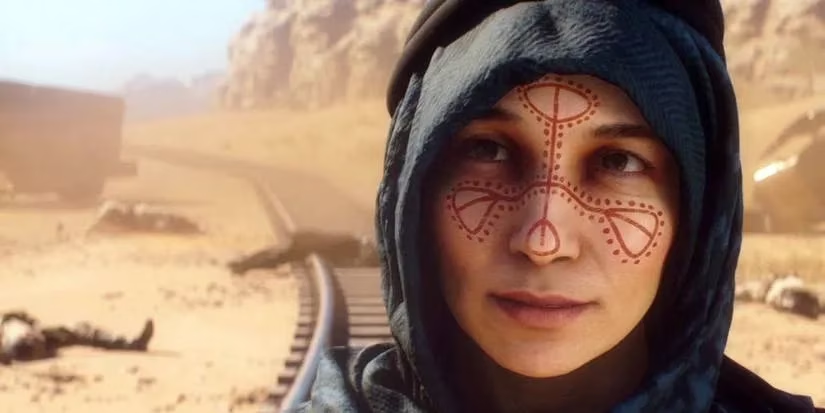
So, what’s the cure for this chronic disease of cultural blindness? Fares and Robin agree: educate the people in charge, and build infrastructure so local Arab developers can tell their own stories rather than having them filtered through a lens smeared with Hollywood sausage grease. “My personal goal would be to finally say, ‘Yes, there is [a] proper gaming [industry with] studios and publishers in that region that are nurturing local talent,’” Fares says. Robin adds that companies need content review committees that don’t view everything “via the eyes of one ethnicity.” In other words, stop letting a single cultural GPS reroute every narrative into a lake.
Until then, the gaming world remains a theatre where Arabic text is treated like a mysterious spell, Arab names are seen as potential time bombs, and entire cultures are reduced to an exotic backdrop. It’s a bit like a chef who insists on making a traditional mansaf but swaps the lamb with gummy bears, the rice with popcorn, and then wonders why nobody recognizes the dish. The industry has a long, wobbling path ahead — but at least the laughter, bitter as over-steeped tea, keeps us warm in the meantime. 😂
Discussion