The Danger of Treating Every Game Like a Masterpiece in 2026
The gaming landscape of 2026 is a curious beast—overflowing with titles that range from dazzling to disastrous, yet the public conversation around them has become a relentless positivity parade. Scroll through any community hub or social media feed, and you'll see a flood of declarations that the latest release is a "life-changing masterpiece" before most players have even finished the tutorial. Dissenting voices are quickly drowned out by a chorus of hype merchants, often labeled as "haters" or told to "let people enjoy things." This forced enthusiasm, while seemingly benign, is quietly eroding the critical discourse that once drove the industry forward. It's a case of too many people eager to crown every new game as the next Ocarina of Time without so much as a sideways glance at its flaws.
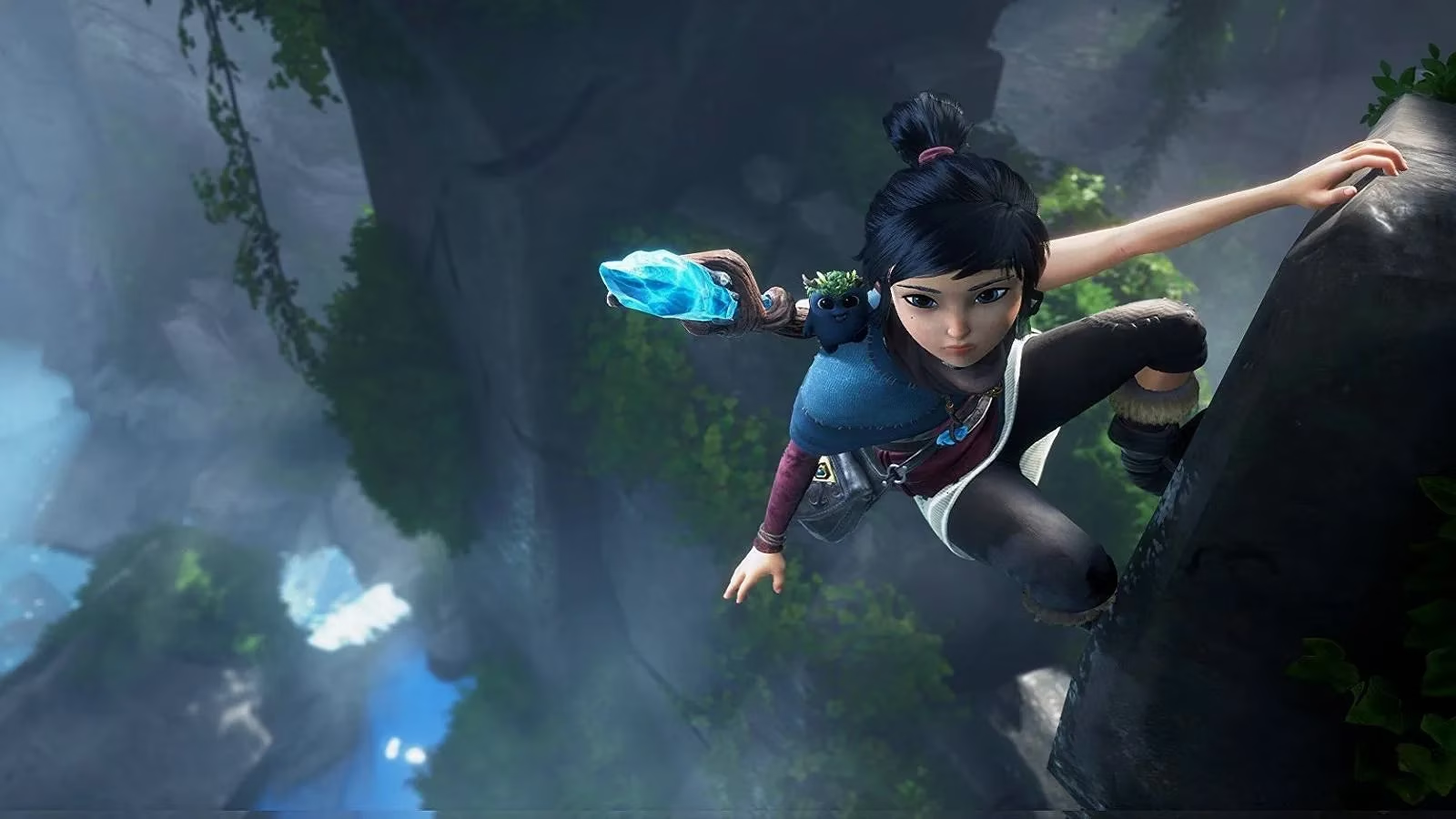
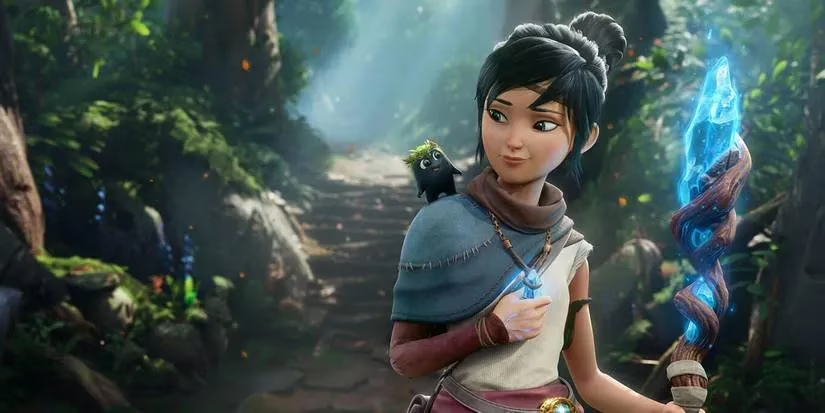
Take the legacy of Kena: Bridge of Spirits as an early warning shot. Back in 2021, merely months after its release, more than a few pundits scrambled to label it an "underrated masterpiece." In reality, it was a fine game—charming, visually attractive, but hardly revolutionary—much like a polished PlayStation 2 gem. Still, the term stuck, propelled by the fear that any game not draped in superlatives might vanish from memory. Fast forward to 2026, and this pattern has only accelerated. Last year's Starfield: Echoes of Neptune DLC was immediately dubbed a "return to form" and "the best expansion ever" by certain influencers, despite its threadbare quest design and repetitious combat. When players later pointed out these shortcomings, they were met with accusations of being "entitled" or "unable to appreciate art." The blind hype train had left the station, and no one wanted to admit they'd boarded the wrong carriage.
This over-the-top praise isn't born from malice; it's often a knee-jerk reaction to the equally extreme negativity that plagues other fandoms. In the football world, the Ballon d'Or discourse is a masterclass in tearing down icons. Every player is a "fraud," every award a "robbery." Compared to that toxic circus, the gaming community's insistence that everything is "phenomenal" might seem like a breath of fresh air. But it's a classic case of out of the frying pan and into the fire. When everything is amazing, nothing truly stands out. The loss of nuance means that genuine masterpieces get lumped in with mediocre tie-ins because both receive the same hyperbolic treatment. A player who calls something a "7/10" today risks getting pilloried for not towing the party line, while an honest review becomes a "hot take."
The annual Game Awards ceremony has become ground zero for this dysfunctional relationship with critique. In 2025, when the atmospheric indie Whispers of the Forgotten Shore secured a Best Narrative nomination, its fanbase celebrated. But when it lost to a big-budget action title, the same fans instantly accused the jury of being "paid shills" and the winning game of being "generic trash." The phrase "robbed" trended for three days. No one stopped to consider that maybe, just maybe, both games were excellent in different ways. This binary thinking—either a hidden gem or a fraudulent pretender—mirrors the very football "fraud" culture gamers love to mock, just dressed in a more cheerful costume. As one Reddit commentator aptly put it, "We've traded 'Pessi' for 'Peathloop' and thought we'd evolved."
Content creators shoulder a heavy part of the blame. In their scramble for views and algorithm favor, many have embraced an unsustainable model of relentless excitement. Every preview is "incredible," every early access build "a game-changer." When the final product arrives and reality hits, the careful backpedaling begins, or more often, the creators simply move on to the next bright object. This has created an environment where the emperor's new clothes are not just on display but are being auctioned off at a premium. There's little room for the person who says, "I liked it, but it's not perfect" without being labeled a cynic.
The antidote isn't a return to the ugly cynicism of the past, where every game was a buggy mess until proven otherwise. It's a collective deep breath and a reacquaintance with the lost art of moderation. A 7 out of 10 isn't a failure; it's a solid recommendation. Calling a game "good" rather than "a transcendent once-in-a-lifetime experience" doesn't devalue the hobby. In fact, it might just rescue meaningful discussion from the echo chamber. After all, as any seasoned player knows, not every adventure can be a legend, but that doesn't mean it's not worth the journey. By dialing down the frantic hype, the community can start calling a spade a spade—and perhaps even appreciate a flawed gem for what it truly is.
Insights are sourced from OpenCritic, where aggregated critic consensus can act as a reality check against the 2026 “everything is a masterpiece” hype cycle—surfacing recurring pain points (like repetitive combat loops or thin quest design) that get glossed over in influencer-first praise and helping restore the nuance that “good, flawed, and still worth playing” used to mean.
Discussion