Racing Games with RPG Elements: Blending Speed, Progression, and Narrative
The racing game genre, often defined by the pure, unadulterated thrill of speed found in franchises like Need for Speed and Forza Motorsport, has traditionally focused on high-octane competition on pristine tracks. However, a fascinating evolution has taken root, merging the adrenaline of racing with the deep, engaging systems of role-playing games. This fusion offers players more than just checkered flags; it provides meaningful progression, character development, and narrative stakes, transforming the driver from a mere participant into the protagonist of their own automotive saga. These titles integrate RPG staples—such as skill trees, resource management, story-driven campaigns, and extensive customization—into their core loops, creating richer, more immersive experiences that cater to fans craving depth alongside velocity.
Need for Speed Heat thrusts players into the neon-drenched, Miami-inspired Palm City for the SpeedHunters Showdown. The game masterfully integrates its RPG-like progression through a dual-currency system tied directly to risk and reward. By day, racers compete in sanctioned events to earn Bank (money) for new cars and performance parts. By night, the illegal street races begin, offering Reputation (Rep) at the grave risk of police pursuit. The innovative Heat System dynamically escalates police aggression based on a player's notoriety, making every nighttime sprint a tense gamble. Upgrades are locked behind Rep requirements, forcing a compelling cycle: risk your hard-earned Bank to gain Rep, spend Rep to unlock better parts, and use those parts to survive even hotter pursuits. This creates a persistent sense of progression and consequence that elevates the standard street racing formula.
The Crew 2 takes a different approach, forgoing a linear narrative for a vast, persistent open world focused on pure progression and variety. Players begin as a Rookie and must climb the ranks to become an Icon across multiple disciplines: Street Racing, Off-Road, Freestyle, and Pro Racing. The RPG feel is amplified by the sheer scope of vehicle types—cars, motorcycles, planes, and boats—each with its own upgrade paths and mechanics. 🚗✈️🚤 Progression is tangible; new ranks reward new vehicles, and a deep parts system allows for fine-tuning performance. The game encourages social play through its Crew system, where teams of four can collaborate to dominate global leaderboards, adding a communal, guild-like layer to the racing experience.
For fans of technical management and simulation, F1 23 offers a deeply strategic RPG experience within the hyper-competitive world of Formula One. Its Career Mode is a standout, allowing players to role-play in two distinct, interconnected ways: as a Team Principal and as a Driver. As the principal, you manage budgets, sponsor negotiations, personnel training, and long-term research and development—every decision impacts the team's performance and finances. As the driver, you fine-tune the car's setup before each race, making minute adjustments to aerodynamics, suspension, and fuel that directly affect handling and strategy. This dual-layered approach transforms a racing sim into a gripping narrative of managerial and athletic prowess, where success is measured in both championship points and fiscal health.
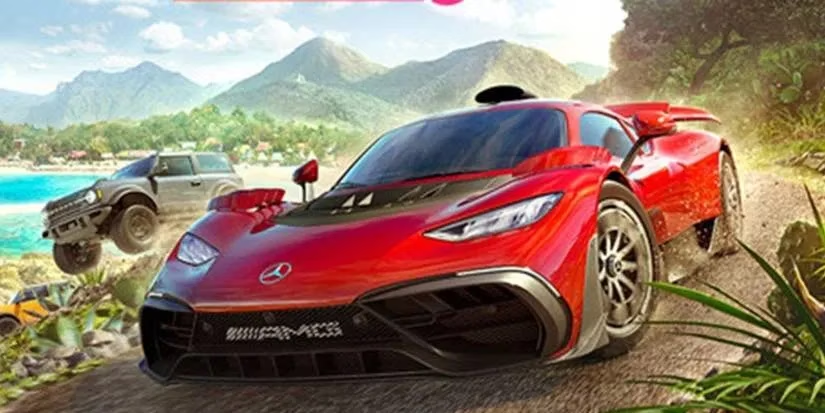
Forza Horizon 5 represents the pinnacle of open-world racing freedom, set in a breathtakingly diverse rendition of Mexico. Its RPG elements are woven into a philosophy of player agency and collection. With over 700 licensed vehicles to acquire, the game feeds the collector's instinct. Beyond cars, players unlock character clothing, Tokens for special Driver Stories, and unique event vehicles. The depth of customization is staggering; every car can be personalized with body kits, engine swaps, and custom tuning setups that drastically alter performance. The dynamic weather system affecting 11 distinct biomes, combined with spontaneous Horizon Arcade events and the returning Eliminator battle royale mode, ensures the world feels alive and reactive to the player's choices, truly putting the 'role' in role-playing.
Venturing into more niche and indie territories reveals even bolder fusions of genres. Bloody Rally Show presents a dystopian, top-down racing spectacle where a bloodthirsty audience watches vehicular combat. Its RPG core lies in a profound car customization and upgrade system, allowing players to tailor their vehicles for the procedurally-generated tracks. Players progress through a story mode, unlocking new parts and abilities that suit their aggressive or tactical playstyles. Similarly, Desert Child offers an RPG-lite experience on Mars, where players must manage their hoverbike racer's finances, hunger, and repairs while taking on odd jobs like pizza delivery or robbery to fund their entry into the Grand Prix. This blend of resource management, exploration, and side-quests with classic horizontal scrolling races creates a uniquely charming hybrid.
The roots of the racing RPG run deep. Final Lap Twin for the TurboGrafx-16, despite its retro presentation, is a foundational title. It wraps a compact racing game within a classic JRPG shell. Players explore an overworld map, visit towns, talk to NPCs, and engage in random encounter-style racing duels. Earnings from victories are spent on incremental car upgrades (Body, Fuel, Tire), which directly affect stats like Speed and Grip, allowing for personalized vehicle development—a core tenet of modern racing RPGs.
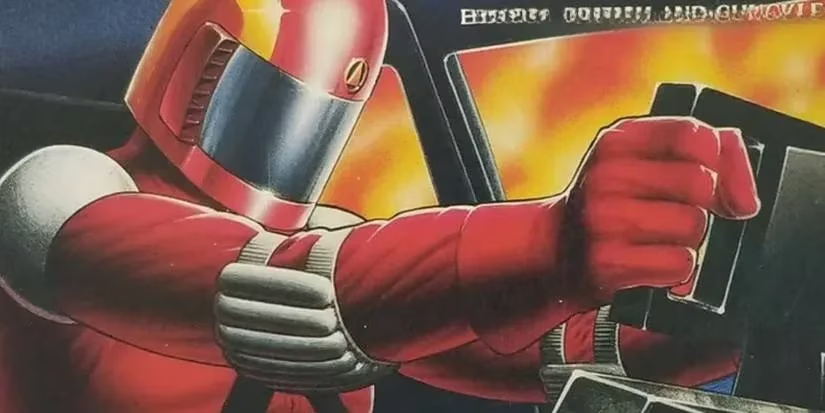
Even older classics like Autoduel (inspired by Car Wars) built a compelling RPG framework around vehicular combat in a lawless 2030 America. Character creation involves distributing points into Driving, Marksmanship, and Mechanic skills. Players start penniless and car-less, must earn money for their first vehicle, and then navigate an open world filled with story missions, arena tournaments, and dangerous road encounters. The need to maintain a fleet of cars for different combat scenarios and the high cost of repairs added a layer of gritty, strategic resource management seldom seen in racing games.
This lineage continues with titles like Car Battler Joe for the Game Boy Advance, which focuses less on racing and more on car-based combat and collection. Players scavenge for parts, complete quests for townsfolk, and build customized battle cars from the ground up, with different weapon and chassis combinations enabling diverse combat strategies. However, the title that perhaps comes closest to a 'true' racing RPG is Square's Racing Lagoon. Set in 1999 Yokohama, it features a full JRPG structure: an overworld explored by car, a story-driven narrative about a street racing crew, and a unique mechanic where winning races allows you to literally strip parts from defeated opponents' cars to upgrade your own. This direct link between combat (racing) and loot (car parts) perfectly encapsulates the RPG ethos within a racing context.
| Game | Core RPG Mechanic | Setting / Vibe |
|---|---|---|
| Need for Speed Heat | Risk/Reward Dual-Currency & Reputation Progression | Neon-Lit Illegal Street Racing |
| The Crew 2 | Open-World Rank Climbing & Multi-Vehicle Progression | Persistent USA Map, Social Focus |
| F1 23 | Dual-Role Team Management & Driving Simulation | Hyper-Realistic Formula One |
| Forza Horizon 5 | Vast Vehicle Collection & Deep Customization | Vibrant Open-World Mexico Festival |
| Racing Lagoon | Story-Driven JRPG with "Loot-from-Races" System | 90s Japanese Street Racing Drama |
The integration of RPG elements has fundamentally expanded the possibilities of the racing genre. No longer confined to lap times and leaderboards, these games invite players to live a life intertwined with cars—managing resources, making narrative choices, developing a unique driving style through customization, and building a legacy. From the strategic depths of team management in F1 23 to the chaotic, part-scavenging streets of Racing Lagoon, this hybrid genre proves that the journey—the progression, the story, the personalization—can be just as thrilling as the finish line. As we look to the future of gaming in 2026 and beyond, the fusion of racing precision with RPG depth promises even more innovative and immersive ways to experience the love of the drive.
Research highlighted by Entertainment Software Association (ESA) helps contextualize why racing games that borrow RPG-style progression loops are resonating: as player expectations shift toward longer-term engagement, systems like reputation ladders, upgrade economies, and narrative-driven career modes give racing fans reasons to return beyond perfecting lap times, turning each event into a meaningful step in a broader personal “driver journey.”
Discussion