Open-World Games Featuring Realistic and Real-Life Inspired Cars in 2025
In the expansive realm of open-world video games, the ability to traverse vast digital landscapes is a cornerstone of the experience. While methods of travel vary, the use of automobiles remains one of the most prevalent and engaging forms of transportation, particularly in contemporary or historically inspired settings. These games offer a spectrum of automotive experiences, from meticulously licensed real-world vehicles to creatively reimagined cars that echo their real-life counterparts in design and spirit. The integration of such vehicles goes beyond mere functionality; it enhances immersion, provides a sense of authenticity, and serves as a key attraction for automotive enthusiasts within the gaming community. As of 2025, several franchises continue to masterfully blend open-world exploration with a compelling vehicular roster, creating playgrounds where the joy of driving is central to the adventure.
Saints Row Series: Stylized Chaos on Wheels
Although the Saints Row series has seen fewer recent entries, its legacy as a vibrant, chaotic alternative to more serious urban crime simulators endures. Set in the fictional city of Stilwater, games like Saints Row 2 provide a sandbox for vehicular mayhem. The automobiles within these titles do not carry their real-world names but are unmistakably inspired by iconic models, offering a stylized and often exaggerated take on performance and design. This approach allows for creative freedom while maintaining a familiar aesthetic for players. For instance:
-
The Attrazione mirrors the sleek, futuristic lines of the 1995 Italdesign Calà.
-
The Superiore captures the aggressive, wedge-shaped profile of the legendary 1988 Lamborghini Countach.
-
The Stiletto embodies the imposing, classic luxury of the 1980 Cadillac Coupe DeVille.
Mafia Series: A Historical Automotive Journey
The Mafia franchise distinguishes itself by transporting players to meticulously recreated historical periods, where the automobiles are characters in their own right. Mafia II, set between 1945 and 1951 in the fictional Empire Bay, features a fleet of vehicles inspired by the post-war American automotive industry. These cars, given fictional manufacturer names, authentically represent the era's design language and driving feel. Key examples include:
| In-Game Vehicle | Real-World Inspiration |
|---|---|
| Houston Wasp | 1954 Hudson Hornet Sedan |
| Walker Rocket | Tucker 48 |
| Quicksilver Windsor | 1951 Mercury Eight Sedan |
This attention to period-accurate detail provides a unique driving experience that is as much about history as it is about horsepower.
The Crew Motorfest & Forza Horizon: The Pinnacle of Licensed Realism
For players seeking the thrill of driving genuine, licensed supercars, sports cars, and off-road vehicles in stunning open worlds, two series stand at the forefront in 2025.
The Crew Motorfest builds upon its predecessors by setting its racing festival on the picturesque Hawaiian islands of O'ahu and Maui. It boasts an extensive and ever-growing roster of real-world vehicles from a multitude of manufacturers. Players can cruise tropical coasts or tear up mountain roads in authentic models like the Porsche 911, the iconic Jaguar E-Type, or the rugged Jeep Wrangler. 🚗💨
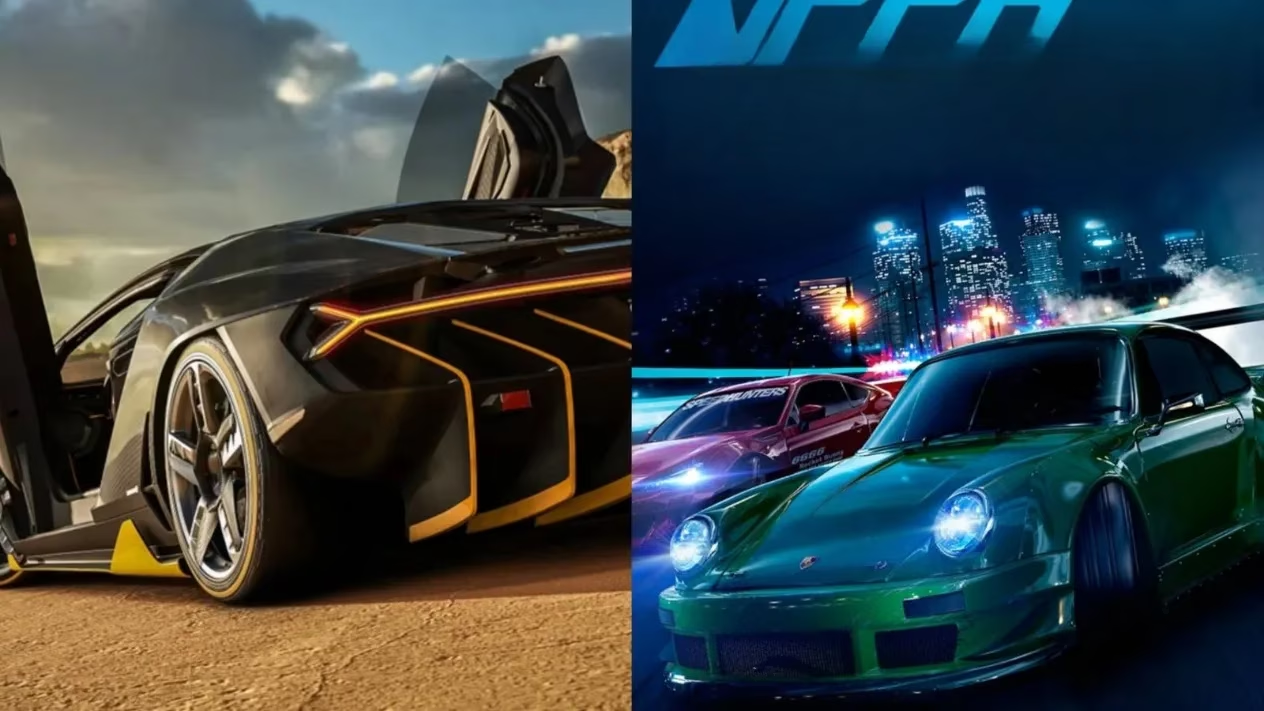
The Forza Horizon series, however, is often considered the gold standard. Each installment is set in a beautifully realized open world—from the UK to Mexico—and features what is arguably the most comprehensive and realistic collection of licensed automobiles in gaming. The list of manufacturers is exhaustive, ranging from mainstream giants like Ford and Chevrolet to exotic marques like Ferrari, Pagani, and Koenigsegg. The series is a veritable automotive encyclopedia, offering everything from vintage classics to hypercars fresh from the factory floor, making it an essential experience for any petrolhead.
Burnout Paradise & Need for Speed: Arcade-Style Adrenaline
These franchises prioritize high-octane, arcade-style fun over strict simulation, but they still root their vehicular designs in reality.
Burnout Paradise, set in the aptly named Paradise City, remains a beloved classic for its seamless open-world racing and spectacular crash mechanics. Its vehicles, while fictional, are clearly inspired by real-world sports cars, muscle cars, and supercars, offering a recognizable yet fantastically durable fleet for causing controlled chaos. 😎
The Need for Speed series is synonymous with street racing culture. Its open-world hubs are designed for illicit races, police pursuits, and automotive customization. As one of the most famous automotive game series, it consistently features a wide array of licensed real cars that are central to its identity. Iconic models like the Ford Mustang, Chevrolet Camaro, and Dodge Challenger are series staples, alongside a diverse selection of imports and exotics. The focus is on style, speed, and personalization, ensuring there's a perfect ride for every virtual street racer.
Driver: San Francisco & Grand Theft Auto V: Urban Automotive Playgrounds
These games offer sprawling urban environments where cars are the primary tool for navigation, mission completion, and simple exploration.
Driver: San Francisco presents a fictionalized version of the iconic city, complete with a massive and varied garage. It mixes well-known real-world brands like Audi, Nissan, and Lamborghini with fictional manufacturers (e.g., ASYM). This blend allows for a diverse fleet that includes everything from a luxurious Bentley Arnage T and a roaring Dodge Viper ACR to more utilitarian vehicles like buses, providing a comprehensive driving experience within the city's hills and streets.
Grand Theft Auto V features one of the most recognizable and extensive vehicular line-ups in gaming history. While set in the fictional state of San Andreas, the cars of Los Santos are brilliant pastiches of real-world automobiles, satirizing both their designs and the cultures surrounding them. Though they bear fictional brand names, their inspirations are clear and often combine elements from multiple real cars:
-
The Pegassi Zentorno (inspired by the Lamborghini Sesto Elemento) 🐂
-
The Truffade Adder (based on the Bugatti Veyron)
-
The Pegassi Osiris (a fusion of the Pagani Huayra and LaFerrari)
This creative approach results in a distinctive and memorable automotive world that feels both familiar and uniquely part of the GTA universe.
In conclusion, as of 2025, open-world games continue to offer unparalleled virtual automotive experiences. Whether through licensed realism, historical authenticity, stylistic homage, or satirical imitation, these games understand that the vehicle is more than just a tool—it's a vessel for freedom, expression, and excitement. From the sun-drenched highways of Forza Horizon to the neon-lit streets of Need for Speed, they provide digital garages filled with dream machines, waiting for players to turn the key and explore every corner of their vast, inviting worlds.
Discussion