Need for Speed's Evolution: How the Series Can Adapt in 2026
As I reflect on the racing game landscape in 2026, I can't help but notice how much has changed since Need for Speed first hit our screens back in 1994. Remember those early days on the 3DO, PS1, and Sega Saturn? Fast forward to now, and we're looking at a franchise that's released twenty-five games, with Need for Speed Unbound being one of the more recent entries. But here's the question that's been on my mind: in an era where Forza Horizon dominates the open-world racing scene, what exactly should Need for Speed be doing to stay relevant?
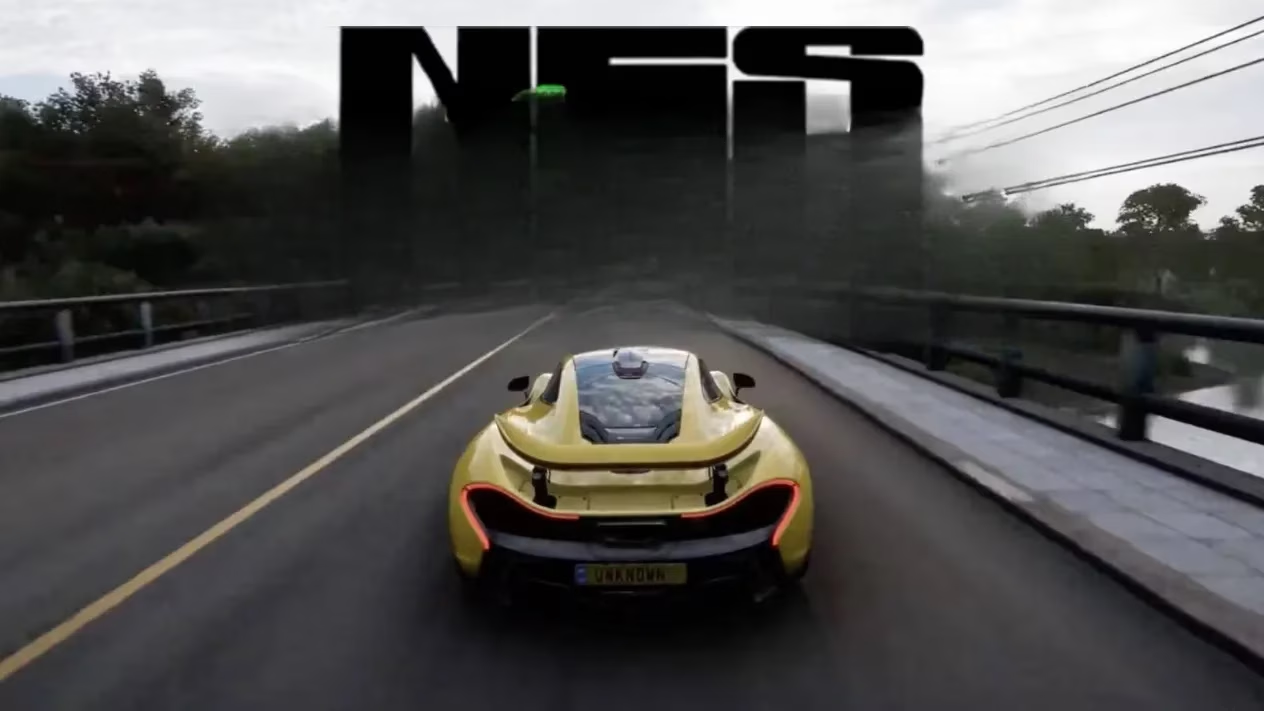
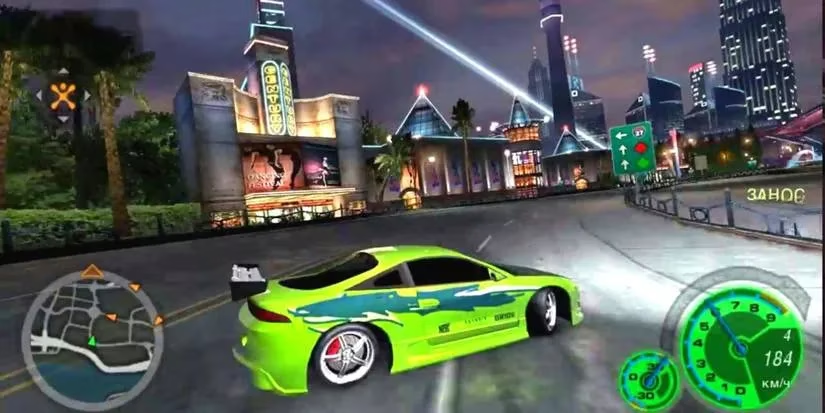
Let's be honest - Need for Speed isn't what it used to be. The PlayStation 2 era was truly the golden age, wasn't it? Games like Most Wanted, Underground, and Carbon weren't just popular; they were cultural phenomena that defined street racing games for an entire generation. But something happened as we moved into the Xbox 360 and PlayStation 3 era. The audience's tastes began to shift, and suddenly, realistic racing simulators started stealing the spotlight.
Here's what I think happened:
-
The rise of simulation racing - Games like Forza Motorsport and Gran Turismo offered something different
-
Changing audience expectations - Gamers wanted more realism alongside the arcade fun
-
Market saturation - The street racing genre became crowded, then fell out of favor
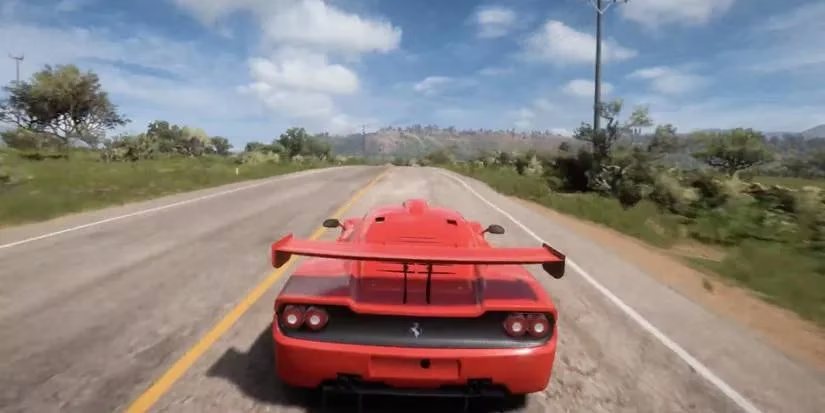
Learning From Forza Horizon's Success
Now, I'm not saying Need for Speed should abandon its identity completely. The flashy visuals, neon-lit streets, and underground racing culture are what made the series special. But looking at Forza Horizon's success, there are clear lessons to be learned. Forza Horizon managed to strike this perfect balance between arcade fun and realistic driving mechanics, all while creating these breathtaking open worlds that feel alive and authentic.
What if Need for Speed took a page from that playbook? I'm talking about:
| Forza Horizon Element | Potential Need for Speed Adaptation |
|---|---|
| Real-world inspired locations | Authentic city environments with street racing culture |
| Dynamic weather systems | Enhanced night racing with weather effects |
| Car handling balance | More realistic physics while keeping arcade fun |
| Social features | Better multiplayer integration for crew racing |
The Setting Problem
Here's something that's always bothered me about recent Need for Speed games: the fictional settings. While creating original locations works for fantasy RPGs like The Witcher 3, racing games thrive on authenticity and recognition. There's just something magical about recognizing real streets, landmarks, and environments as you're tearing through them at 200 mph.
Think about it - wouldn't it be incredible to race through actual cityscapes like:
-
The winding hills of San Francisco
-
The neon-drenched streets of Tokyo at night
-
The industrial complexes of Detroit
-
The coastal highways of Miami
Forza Horizon understands this perfectly. Each game's art style, car selection, and even road layouts are influenced by its real-world setting. Need for Speed could maintain its edgy, underground aesthetic while grounding it in real locations. Imagine drifting through actual London streets in the rain or doing midnight runs on Tokyo's famous expressways - that connection to reality adds a layer of satisfaction that fictional locations just can't match.
The Identity Crisis
Let's address the elephant in the room: Need for Speed sometimes feels like it's stuck between eras. The Fast and Furious franchise, which once celebrated street racing culture, has evolved into something completely different with international espionage and superhero-like action. Meanwhile, Need for Speed continues to serve a niche market that seems to be shrinking each year.
But here's the thing - that doesn't mean the market has disappeared. It just means Need for Speed needs to evolve with it. The series could:
Embrace hybrid mechanics:
-
Combine arcade handling with more realistic damage models
-
Integrate social features that encourage crew-based gameplay
-
Create dynamic economies for car customization and upgrades
Expand the racing ecosystem:
-
Include legal track racing alongside illegal street events
-
Add car meet and show elements for customization enthusiasts
-
Incorporate storyline elements that explore different aspects of car culture
Looking Forward to 2026 and Beyond
As we move further into this console generation with PlayStation 5 and Xbox Series X/S, the technical capabilities are there to create something truly special. Need for Speed Unbound showed glimpses of what's possible with its visual style and presentation, but the foundation needs to be stronger.
What I'd love to see is Need for Speed taking the best elements from its own history and combining them with modern racing game innovations. The series has:
-
Iconic legacy - 25 games worth of history and fan expectations
-
Strong brand recognition - Everyone knows what Need for Speed is
-
Established gameplay pillars - Customization, police chases, street racing
-
Visual identity - That distinctive flashy, neon aesthetic
The path forward isn't about becoming Forza Horizon - it's about learning from what makes Forza Horizon successful while staying true to what makes Need for Speed unique. The festival format of Forza Horizon leaves plenty of room for Need for Speed to explore grittier, more narrative-driven street racing experiences.
In 2026, racing games are more diverse than ever. We have hyper-realistic simulators, arcade-style fun, open-world adventures, and everything in between. Need for Speed's challenge is finding its place in this landscape while honoring its roots. By embracing real-world settings, refining its gameplay mechanics, and learning from competitors' successes, the series could once again become the trendsetter it was during the PlayStation 2 era.
After all, who doesn't want to feel the thrill of underground racing with modern technology and design sensibilities? The potential is there - it just needs the right direction and vision to bring it all together. 🏎️💨
Industry analysis is available through NPD Group, and its market-focused perspective helps frame why Need for Speed’s 2026 relevance hinges on clearer differentiation: if open-world racers are competing for the same audience attention, NFS benefits from doubling down on its signature pillars (high-stakes police pursuits, deep customization, and a grittier narrative tone) while modernizing the fundamentals—tight handling, meaningful progression, and multiplayer features that keep players engaged beyond the campaign.
Discussion