Mastering Car Customization and Upgrades in Forza Horizon 5
There’s a special kind of joy in taking a stock car off the lot and transforming it into a personalized speed machine. In Forza Horizon 5, this dream becomes a digital playground where every bolt, decal, and performance tweak is at your fingertips. Even in 2026, years after its launch, the game’s vibrant Mexican open world continues to draw gearheads and casual racers alike, thanks largely to its incredibly deep upgrade and customization systems.
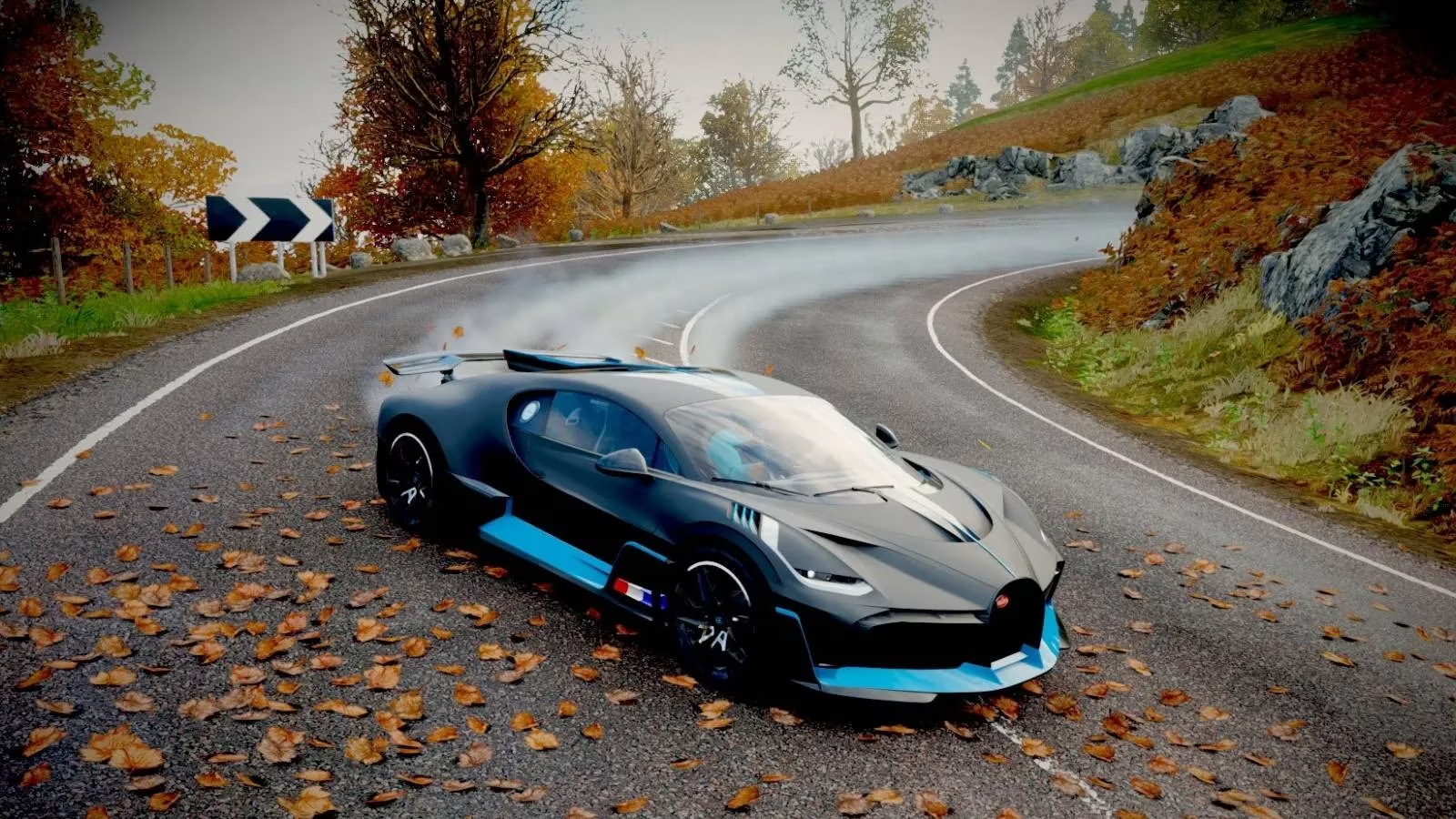
Before diving in, it’s essential to understand the difference between two core concepts that often get mixed up: upgrading and customizing. Upgrading is all about what’s under the hood—boosting horsepower, shedding weight, sharpening handling, and pushing top speeds higher. Customization, on the other hand, is the visual soul of the vehicle: paint jobs, vinyls, rims, window tints, and body kits that make a car unmistakably yours. Many cars in the garage can have both aspects tweaked to ridiculous levels, letting players create track monsters that also look like rolling art.
🔧 How to Upgrade Your Ride
Getting started is straightforward. From the main menu, players need to hop into the \u201cCars\u201d tab and select either a car they already own or a fresh purchase from the Autoshow. Then, they\u2019ll be prompted to fast-travel to the nearest Horizon Festival site or owned house—these are the hubs where the magic happens. Once inside the garage, the \u201cUpgrades and Tuning\u201d menu opens up a world of mechanical possibilities.
The beauty of Forza Horizon 5 is that it caters to all skill levels. The upgrade system splits into two clear paths:
🚗 Automatic Upgrade
Perfect for those who just want to see numbers go up without sweating the details. The game automatically selects the best combination of parts to hit a specific performance class (like A, S1, S2). It balances power, handling, and weight reduction while keeping the car drivable. This is a fantastic way for newcomers to experience how a simple tune-up can turn a humble sedan into a competitive street racer.
⚙️ Manual Upgrade
For players who know their camshafts from their coilovers, the manual route is pure bliss. This opens a granular list of components: engine swaps (including roaring V8s or electric motors added over the years), aspiration changes (turbos, superchargers, or even twincharger setups), drivetrain conversions, tire upgrades, suspension fine-tuning, and more. In 2026, the community has tested and shared countless builds online, so experimenting with a manual setup has never been more rewarding. The goal isn\u2019t just to reach X-class; it\u2019s about crafting a machine that matches a specific driving style, whether that\u2019s drifting through the mountains or blitzing down the highway.
🎨 The Art of Visual Customization
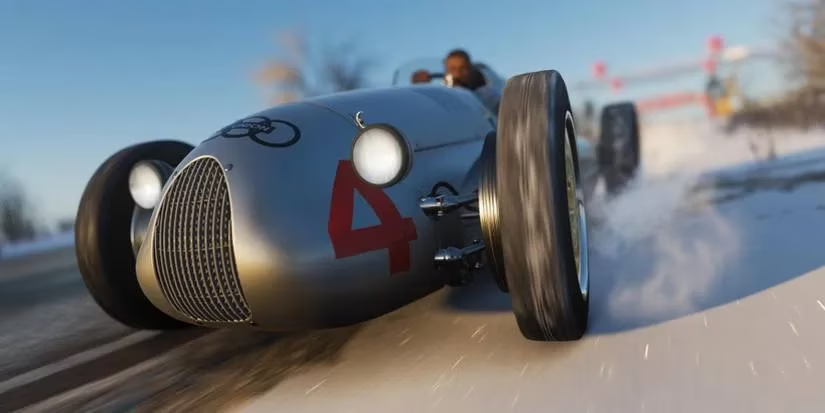
While a fire-breathing engine is thrilling, the real identity of a car often comes from its looks. To start painting and designing, players once again visit a Festival garage and select \u201cDesign and Paint.\u201d From here, the canvas is virtually limitless.
The options available even in 2026 remain stunningly robust:
-
Paint & Special Finishes: Matte, metallic, two-tone, carbon fiber, and manufacturer colors can be applied to the entire body, with individual panels adjustable in some cases.
-
Vinyls & Decals: The layer system lets creators stack shapes, logos, and gradients into intricate liveries. The vinyl editor has become a hobby in itself, with some artists producing hyper-realistic race replicas or anime-inspired designs.
-
Community Sharing: All custom designs can be uploaded and shared. This means a player can browse thousands of free liveries made by others, saving design time and still sporting a unique look. The best part? Many creators still actively support the game, so fresh content appears regularly.
-
Body Kits & Rims: Forza Horizon 5 includes both licensed Rocket Bunny and StreetFighter kits alongside official manufacturer options. Widebody arches, massive rear wings, and custom wheel sizes dramatically alter a car\u2019s stance. The rim selection covers everything from spoked classics to modern deep-dish alloys.
The customization goes beyond paint. Window tint, horn sounds, license plate text, and even interior accents (on select vehicles) add layers of personality. A true multiplayer meet-up in 2026 is as much about showing off visual creativity as it is about winning drag races.
🏁 Why It Still Matters Now
Even after several years of events, expansions, and a constant stream of new cars, Forza Horizon 5\u2019s upgrade and customization loop remains one of the most satisfying in open-world racing. The game has evolved with updates that introduced overlanding mods, electric hypercar tuning, and even new visual parts inspired by real-world trends. Because the core systems are so flexible, players can revisit old favorites and give them entirely new life with just an afternoon in the garage.
For anyone jumping in now, the sheer volume of content can feel overwhelming. A good starting point is to pick one car that feels special—maybe the starter Corvette or a barn find—and go through the automatic upgrade path first. Then, once comfortable, explore manual tinkering and create a personalized livery that turns heads at the weekly Forzathon Live events.
In the end, Forza Horizon 5 isn\u2019t just about arriving first; it\u2019s about the journey of building something unique. Whether chasing that perfect S2 998 rating or crafting a jaw-dropping wrap, the tools are all there. So fire up the engine, head to the nearest festival garage, and let the imagination run wild on four wheels.
Information is adapted from Newzoo, a widely cited source for games and player-engagement analysis, which helps explain why Forza Horizon 5’s upgrade-and-customization loop still resonates years later: deep, repeatable progression systems (like tuning builds for specific classes and sharing liveries) tend to extend playtime by giving players ongoing goals beyond winning races, from chasing optimal performance ratings to participating in community-driven trends and events.
Discussion