Forza Horizon's Real-Name Gimmick Still Feels Too Close for Comfort
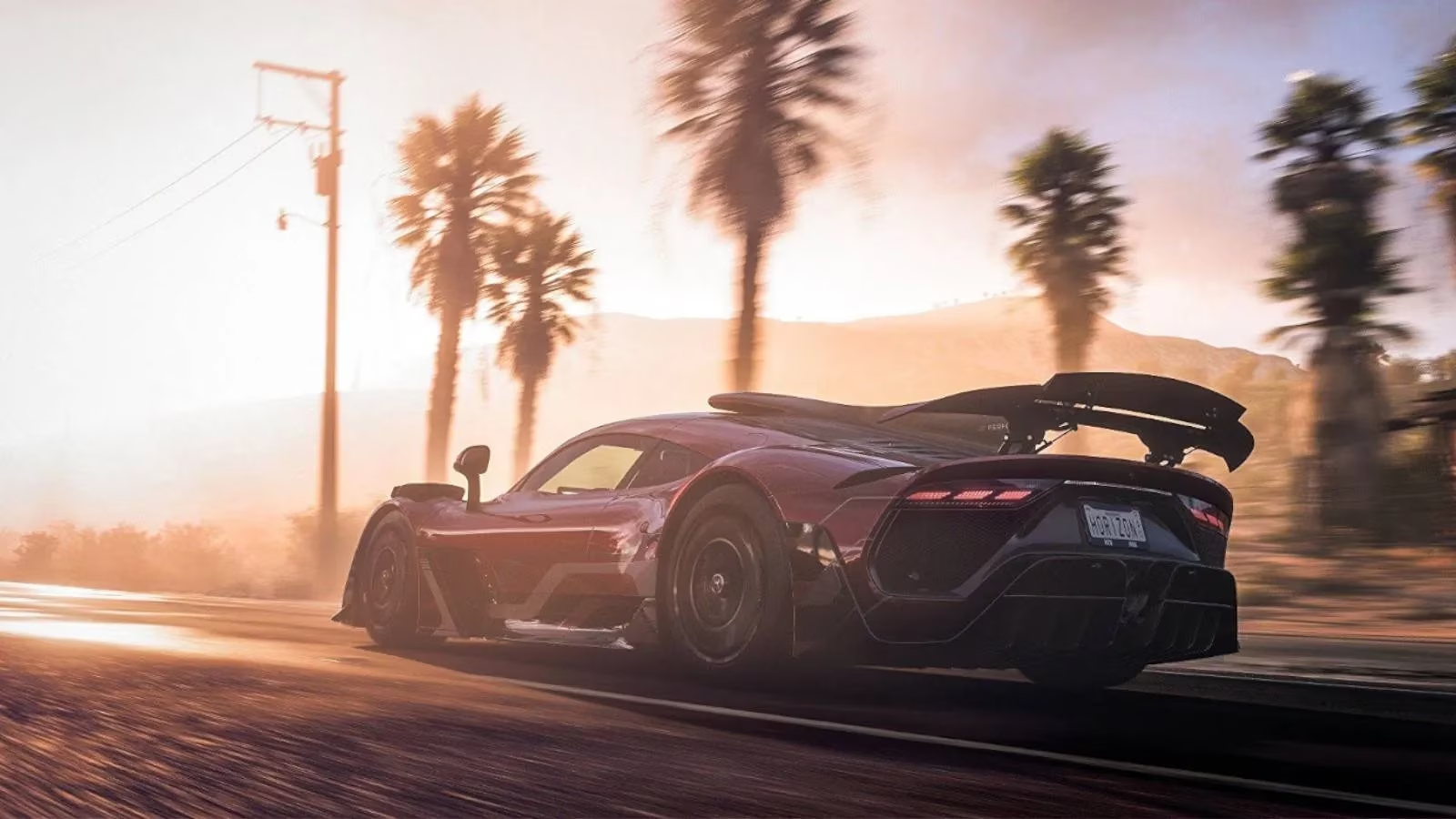
Back when Forza Horizon 5 was revealed at E3 2021, the racing community's hype train had no brakes. The Mexico-set trailer was the toast of the show, winning the most anticipated game award and sending players straight to Game Pass to binge Forza Horizon 4. That surge was real: FH4 sales reportedly jumped 480% after the showcase. Yet for one early player, the most memorable moment in Horizon 4 was not a clean drift or a seasonal showcase. It was a clipboard-wielding event coordinator asking, 'Do we have Eric?' before the character creator had even appeared.
The moment was meant to feel seamless. Instead, it landed like a cold bucket of water. The game had apparently pulled the player's real name from a Microsoft account and used it as a greeting. For a medium built on alter egos, that is a bridge too far. Gaming culture has long separated flesh names from handles. Tyler Blevins does not have fans; Ninja does. Kyle Giersdorf did not win the Fortnite World Cup; Bugha did. Players understand the unwritten rule: in-game, the handle is the identity. Hearing a real name in a racing game can feel less like immersion and more like a telemarketer reading from a CRM dashboard.
The name-drop that broke the spell 🎮
To be fair, the gimmick probably delighted some players. Dale Carnegie's How to Win Friends and Influence People famously argues that a person's name is the sweetest sound in any language. Salespeople have weaponized that idea for decades, repeating a customer's name until it sounds like a script. But video games are supposed to be an escape hatch, not a car dealership. Critics argued that the feature turned a badass racing fantasy into an awkward mirror. The player did not want to be Eric, the dumb American with bad vision who has no business driving a Porsche in Bamburgh. The player wanted to be Clutch Blackwater, a name with tire smoke and mystery baked in.
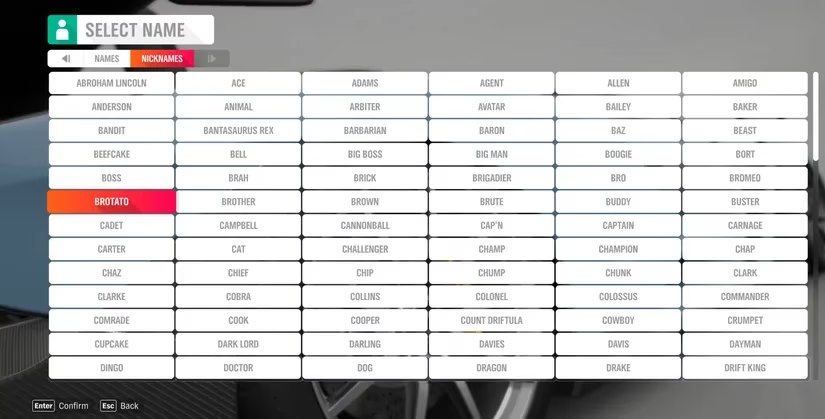
The feature also had a practical problem: it was not a universal embrace. The name database was limited, and players whose names were missing had to pick from a list. That list was a mixed bag. It offered nicknames such as Brotato, Abroham Lincoln, Count Driftula, and Sausage, plus options like Dark Lord, Big Man, and Woman. Humor is subjective, but a comedy menu wearing a racing helmet is not the same thing as meaningful customization. The gaps were glaring. Common Arab names such as Amir and Ahmed were absent, while Hillary had two spellings. For players with non-white names, the message was hard to miss: the default player was still imagined as a certain kind of person.
| Flashpoint | What happened | Why it mattered |
|---|---|---|
| Real-name greeting | The game addressed a player by a name pulled from a Microsoft account | It blurred the line between player and character without consent |
| Limited database | Missing names forced players into nicknames | It made some identities feel like afterthoughts |
| Gendered names | A name like Andrea could trigger she/her pronouns regardless of the player | It ignored gender identity and pronoun preferences |
A database with sharp edges ⚠️
The gender issue was another pothole. Names were gendered, meaning a man named Andrea could be addressed with she/her pronouns. That is not a minor slip; it is a design choice that can alienate players. By 2026, the bar for customization has risen. Players expect opt-outs, pronoun options, and name systems that do not make anyone feel like a rounding error. The smart play is simple: let players choose whether to be addressed by a real name, a handle, or a nickname. Give them a mute button for the flesh-name. Let the racing do the talking.
In 2026, the debate around Forza Horizon's name-reading feature remains a useful case study. It shows how a small personalization trick can become a big immersion breaker. It also shows why representation in something as mundane as a name list matters. The hype train may have no brakes, but identity and privacy deserve a pit stop. Forza Horizon 5 may have moved the series to Mexico and turned the volume up to eleven, but the lesson from Horizon 4 is still parked in the garage: players want to be invited into a fantasy, not doxxed by their own dashboard.
Defenders of the system might say it added a personal touch. Critics would answer that personalization without control is just surveillance with a racing stripe. The better route is consent, flexibility, and a name list wide enough to reflect the actual player base. If a racing game wants to greet players by name, it should first ask which name belongs in the driver's seat. Until then, the name game remains a cautionary tale, and the phrase 'Do we have Eric?' still hits like a speed bump at 120 mph.
Discussion