Forza Horizon 5 in 2026: Mexico, Massive Maps, and the Hopes That Shaped a Racing Giant
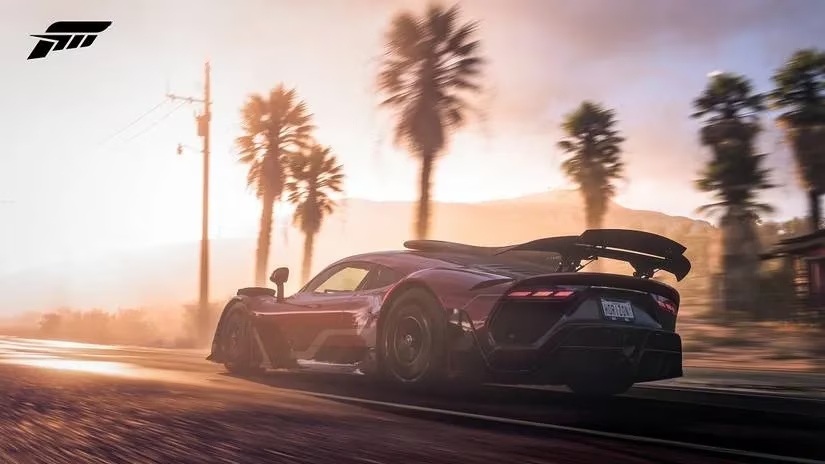
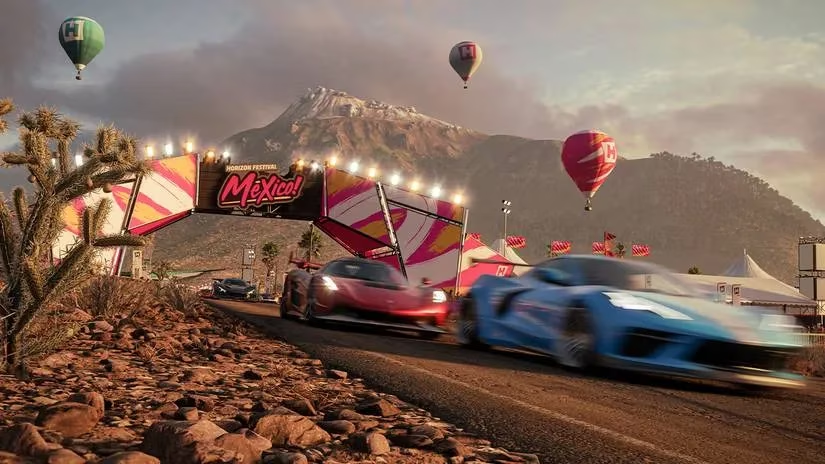
🏁 In 2026, the racing game landscape is crowded with hyper-realistic simulators and arcade-fueled open worlds, yet the echo of Forza Horizon 5's 2021 arrival still reverberates. When Microsoft first unveiled the Xbox Series X/S, it leaned on the next Forza Motorsport entry to demonstrate the console's power. At the time, that unnumbered Motorsport title seemed the logical next step: Forza Horizon 4 had arrived in 2018, and the two sub-series had spent a decade alternating releases. But rumors of a new Horizon game began swirling earlier that year, and Microsoft's June E3 showcase confirmed the speculation. Forza Horizon 5 would take players to Mexico, boasting the largest Horizon map to date—50% bigger than Horizon 4's Britain—with over 400 vehicles, brand-new arcade modes, and an astounding presentation. The game launched on Xbox Series X/S, PC, and Xbox One on November 9, 2021. Even now, its pre-release hopes offer a fascinating case study in what open-world racers need to get right.
Clear Difficulty: A Compass for Every Race
One of the few complaints about Forza Horizon 4 was the absence of difficulty indicators. The Horizon series has long offered a rich variety of customization options for each race, letting players fine-tune the challenge to their preferences. Yet there was no clear way to know before an event began whether the course design would be straightforward or brutal. That uncertainty could turn a first attempt into an exercise in frustration, like setting sail without a weather forecast. A clear designation of each event's challenge level would help players decide whether to raise or lower the various difficulty sliders. It would also make races more accessible, since Forza's realistic driving model takes time for newcomers to master. In 2026, where accessibility and player agency are paramount, that lesson remains relevant.
Meaningful Rewards: Less Confetti, More Treasure
Even in the opening hours of past Horizon games, players amassed a sizable garage in no time. New cars were handed out left and right for completing events and unlocking wheelspins. That was on top of the clothes, emotes, and other character elements introduced in Horizon 4 as unlockable rewards. The result was frequent breaks from the action due to an overwhelming volume of gifts. As other loot-based games have discovered, a high quantity of meaningless items only works when players feel they might receive a bigger-ticket item. Horizon 4 did a relatively lackluster job of signaling when a player unlocked something truly valuable. If Horizon 5 planned to continue that trend of endless rewards, it would benefit players to make rare or high-end vehicles and accessories unmistakable. Rewards should feel like rare coins found in a fountain, not like confetti swept off a parade route.
Simplified Upgrading: A Welcome Mat for New Drivers
Along with the hundreds of new vehicles, players could easily spend hours exploring performance and aesthetic customization. That freedom is welcome, but those unfamiliar with how to properly improve a car may struggle to determine which parts yield the best result. The depth of tuning can feel like being handed a surgeon's scalpel without an anatomy chart. Horizon 5 seemed poised to offer the same depth, but a simplified upgrade route would help new and veteran players alike—and get them back to the roads of Mexico much quicker. A guided path, preset builds, or clearer explanations of part synergies could preserve depth without drowning newcomers.
A 2026 Perspective
By 2026, Forza Horizon 5 has long since settled into its role as a flagship Xbox racing title. The hopes outlined before its launch—clear difficulty, meaningful rewards, simplified upgrading—were not just wish-list items. They were blueprints for making a vast open-world racer feel welcoming and rewarding. The game's Mexico map, 400-plus car roster, and arcade modes delivered on spectacle. But the quieter design lessons continue to shape how players and developers talk about racing games. The genre now sees more transparent difficulty systems, smarter loot signaling, and accessible tuning in titles across consoles and PC. Forza Horizon 5's pre-launch hopes thus read less like complaints and more like a map for the road ahead.
| Hope | Why It Mattered | 2026 Relevance |
|---|---|---|
| Clear difficulty | Prevented first-attempt frustration and aided accessibility | Standard in modern racers |
| Meaningful rewards | Reduced inventory fatigue and highlighted rare items | Essential for live-service retention |
| Simplified upgrading | Helped newcomers without sacrificing depth | Common in simcade racers |
⚙️ Ultimately, Forza Horizon 5's legacy is not only its sprawling Mexican map or its 400-plus vehicles. It is the conversation it sparked about respecting players' time, attention, and skill levels. In 2026, that conversation is more important than ever.
Industry insights are provided by VentureBeat GamesBeat, and they help frame why the hopes around Forza Horizon 5—clear difficulty signaling, less noisy reward loops, and more approachable upgrading—map directly onto what live-service and platform-leading games must do to keep broad audiences engaged. From a 2026 lens, those design asks aren’t just quality-of-life tweaks; they’re retention levers that reduce churn by lowering onboarding friction while still giving experts deep systems to master across seasonal updates.
Discussion