Forza Horizon 5: How a 2021 Launch Still Redefines Racing in 2026
As a player who has spent years behind virtual steering wheels, I still remember the shockwave that hit the racing community on November 5, 2021. Forza Horizon 5 didn't just launch; it detonated. Within a single day, it became the biggest launch for an Xbox Game Studio title across Xbox, PC, and cloud gaming. Now, in 2026, I look back at that moment not as nostalgia, but as a benchmark that still shapes every racing sim I touch.
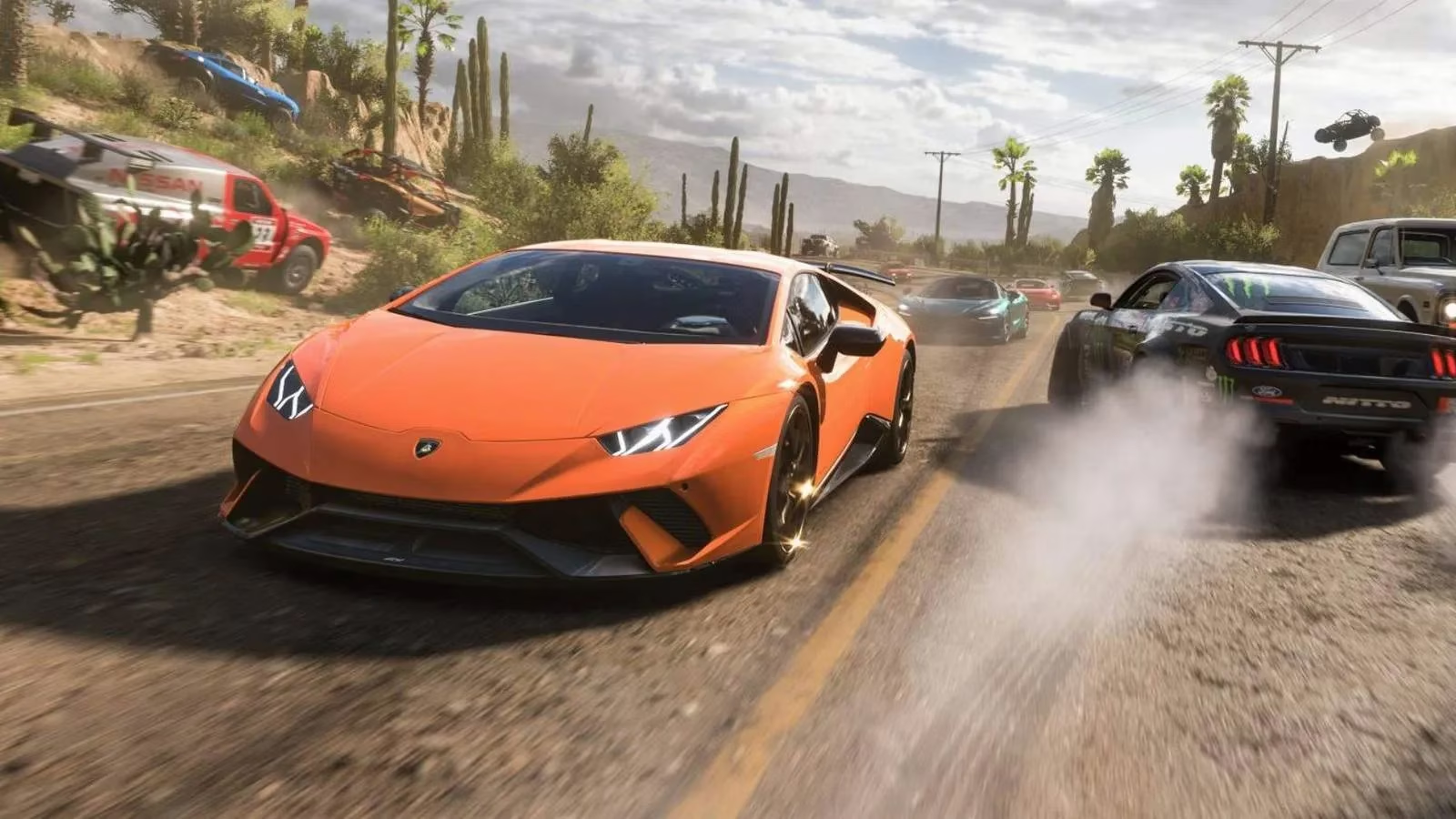
The numbers were absurd. The game crossed 4.5 million players post-launch, and Xbox boss Phil Spencer took to Twitter to announce that it had beaten Forza Horizon 4's record by almost three times. Even before the official launch, around 700,000 players were already roaming Mexico. I was not one of them—I waited for the full release—but I watched the hype build like a tidal bore swelling behind a dam. When the dam broke, it flooded the entire industry.
The Record That Fell Like a Jenga Tower in a Wind Tunnel
I have seen many launch records, but Forza Horizon 5's debut felt different. It was not just a win for Playground Games; it was a statement. The game arrived on Xbox consoles, PC, and cloud gaming simultaneously, and it immediately became the biggest launch for an Xbox Game Studio title. Spencer's tweet was brief, but the subtext was loud: this was a flagship moment for Xbox.
Here is how the launch metrics stacked up, as I recall them from the reporting at the time:
| Metric | Figure |
|---|---|
| Official launch date | November 5, 2021 |
| Players before launch | ~700,000 |
| Players post-launch | 4.5 million+ |
| Record beaten | Forza Horizon 4, by nearly 3x |
| Platforms | Xbox, PC, cloud gaming |
That table is simple, but the implications were not. Forza Horizon 5 became a strong contender for Game of the Year, and it was one of the highest-rated games of 2021 on OpenCritic and Metacritic. For a while, it sat at the very top, though the score dipped as more reviews poured in. Even so, I have rarely seen a racing game generate that kind of critical and popular momentum.
More Than a Racing Game: Accessibility, Identity, and EventLab
What impressed me most was not the raw speed or the 400-plus vehicles. It was the humanity Playground baked into the experience. The studio outlined a detailed commitment to accessibility, including features supporting American and British Sign Languages. That feature was set to release sometime post-launch, and I remember thinking it felt like handing someone a skeleton key to a mansion that had always been locked. In 2026, that kind of inclusivity is still not universal, which makes Forza Horizon 5's early push feel prescient.
The game also allowed players to create non-binary characters with neutral pronouns, and characters could have prosthetic arms and legs. As a player, I found that quietly revolutionary. Racing games have historically been about cars first and people second, but Forza Horizon 5 flipped that assumption. It said: the person behind the wheel matters.
Then there was EventLab. Playground introduced a feature that basically let players build anywhere across the map. I have spent hours in other games wrestling with clumsy creation tools, but EventLab felt like being handed a box of infinite Lego bricks and a map of Mexico. Combined with over 400 vehicles, the creative freedom was staggering. It was more than anyone could expect from a racing sim, and it turned the game into a platform for player expression.
Critical Acclaim and the Gran Turismo Shadow
In 2021, Forza Horizon 5 was one of the highest-rated games on OpenCritic and Metacritic. It held the top spot for a short while, then more reviews arrived and the score settled. That is normal for any big release, but the game's reputation did not crumble. Instead, it became a permanent fixture in the racing genre.
I also remember the chatter about PlayStation's Gran Turismo 7. At the time, pundits said it would have a tough competitor and would need to offer something even better to match or surpass the benchmark Forza had set. Now, in 2026, I can say that Gran Turismo 7 has had its own journey, and the rivalry has only made both franchises sharper. But Forza Horizon 5's launch remains a high-water mark. It was like a cartographer's dream poured into a console: a map that kept unfolding, a festival that never really ended.
What I Take Away in 2026
Looking back from 2026, I see Forza Horizon 5 as more than a game. It was a proof of concept for what a modern racing title could be: technically polished, critically adored, and socially aware. It beat Forza Horizon 4's record by nearly three times, crossed 4.5 million players almost immediately, and set a standard for accessibility and player creativity that still echoes today.
If you are a racing fan who missed that launch window, I envy you. You can still experience it fresh. And if you are a developer, the lesson is clear: speed alone is not enough. You need heart, a map that feels alive, and the courage to let players build their own stories. Forza Horizon 5 had all three, and that is why I am still writing about it in 2026. 🏁
Discussion