Fine-Tuning Anatomy: How I Squeeze Every Ounce of Soul from Forza Horizon 5 Cars
If you’ve ever spent a rainy afternoon trying to transform a stock 2021 Ford Bronco into a drift-happy tarmac predator or a razor-sharp dirt chariot, you already understand the mad-scientist allure of Forza Horizon 5’s upgrade bays. Three years after its release, the game’s tuning screen remains the closest thing we have to an interactive engineering sketchpad—one where a few clicks can turn a gentleman’s cruiser into a twitchy track monster. But here’s the thing: most players treat that grid of sliders and part dropdowns like the climate-control panel on a rental car—they press a few buttons, shrug, and hope for the best. I want to change that. As someone who has logged more hours in FH5’s telemetry than in its livery editor (and I’ve made some appalling anime wraps), I’ve come to see tuning not as a chore but as a negotiation between physics and desire. Let’s peel back the hood.
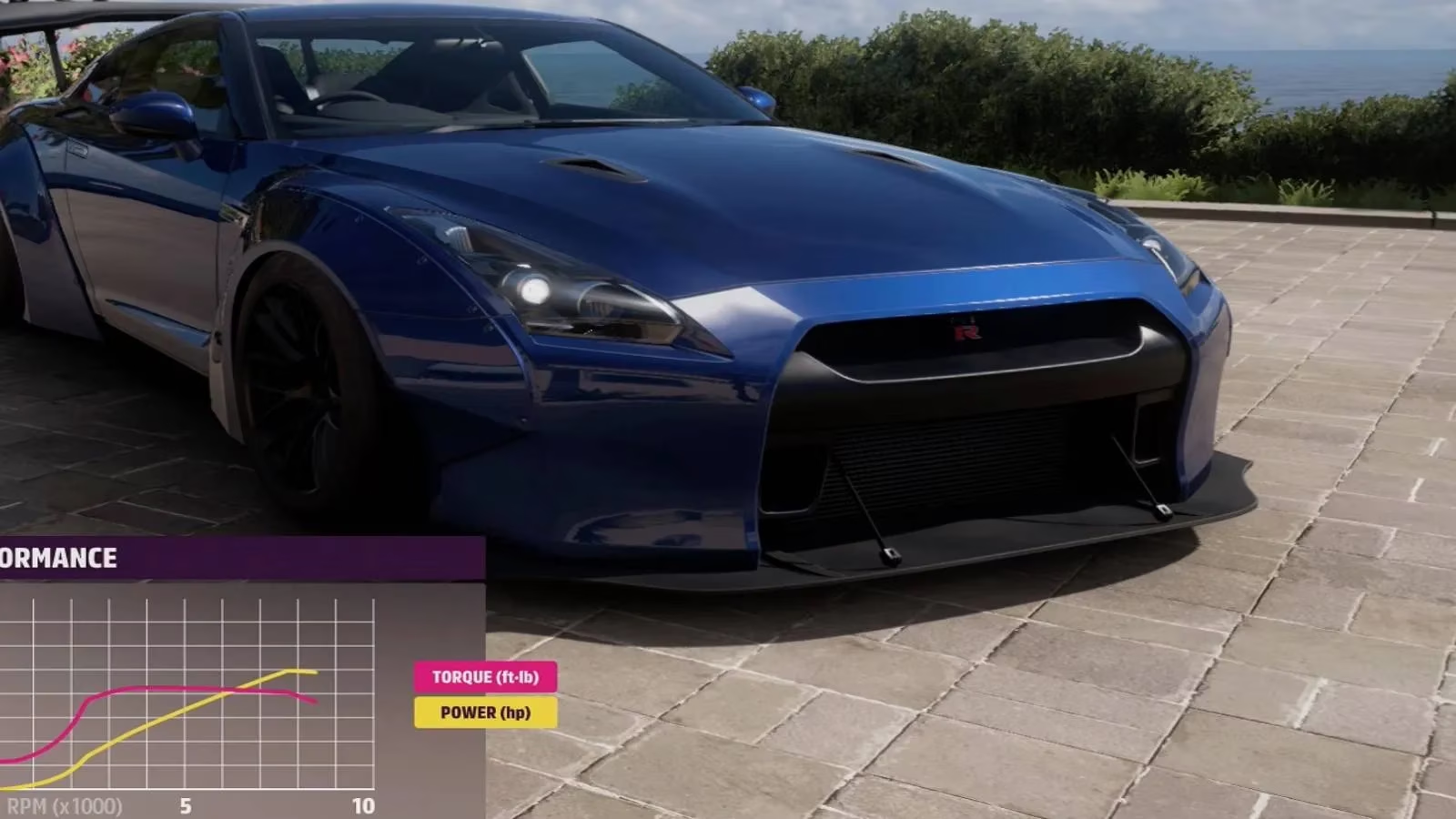
The first truth that seasoned wheelmen learn is that the Garage menu’s Upgrading and Tuning tab is not a magic wand—it’s more like a vintage espresso machine with no automatic settings. You can pull a gorgeous crema or a bitter mess depending entirely on your grasp of the variables. Playground Games gives you immense control: spoilers shift aerodynamic balance, tires recalibrate grip thresholds on asphalt and gravel, and anti-roll bars can nudge a car from understeering pig to tail-happy dancer. But the 2026 meta has taught me that raw part swapping only gets you so far. The real art starts when you flip your driving assist settings from “Standard” to “Simulation.” This is the equivalent of taking off your polarized sunglasses at dusk—suddenly every texture, every camber angle, every brake-pressure nuance becomes a direct line of communication between the road and your fingertips. I’ve seen players clutch their pearls at the thought of losing assisted braking, but trust me, simulation steering is the canvas on which tuning paints its masterpiece. Without it, you’re just dragging your brush across a plastic tablecloth.
Think of a high-performance car’s suspension geometry as a living spinal column. A one-size-fits-all alignment is like asking a ballet dancer to run a marathon in pointe shoes—technically possible, but why subject yourself to that agony? When you slide into the tuning menu and start adjusting spring stiffness or differential deceleration, you’re essentially teaching that spine to flex and arch precisely for the terrain you’re about to attack. For cross-country scrambles, I’ll soften the rear springs and raise ride height until the truck squats and breathes over crests like a panther pouncing through tall grass. For street circuits, I dial in some toe-out on the front and stiffen the anti-roll bars until the apexes feel magnetized. One trick I learned from the competitive scene: overweight your rear springs slightly when converting an all-wheel-drive muscle car into a drift missile. This creates a bias that makes weight transfer behave like a pendulum—the rear end becomes a heavy, swingable counterbalance that begs to hang out around corners.
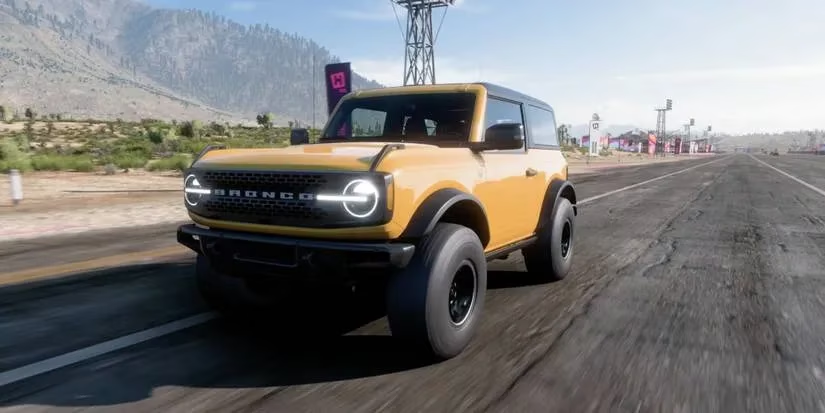
Tuning isn’t just about making a car faster—it’s about sculpting its personality. A lot of my builds deliberately add weight. Before you laugh, consider this: adding mass via a cage or heavy rims is like tossing a hefty keel onto a sailboat. The car becomes more grounded, less susceptible to tiny bumps that send a featherlight hypercar skipping sideways. In high-class rivals events where a single tire on the grass spells disaster, that stability is worth ten aerodynamic points. Understeer and oversteer become tools, not flaws. I’ll often set up my rally machines to understeer on entry and then oversteer on throttle lift-off—a two-phase cornering dance that requires practice but rewards with seamless flow. It’s the automotive equivalent of a jazz drummer playing sloppy hi-hats that somehow land perfectly in the pocket.
Of course, all this fiddling is useless if you’re bankrupt. The 2026 in-game economy still revolves around Wheelspins and the Auction House, and I can’t stress enough how much treasure lurks in those virtual lots. You’ll find gems like a vintage Ferrari or a pre-tuned Hoonigan beast for a fraction of their Autoshow price. Treat the Auction House like a flea market in Maranello—patience, quick fingers, and a willingness to snag a car with a scuffed livery can net you a platform worth every credit. Once you’ve got the canvas, upgrading should follow a deliberate path. I typically install drivetrain and weight-reduction mods first, then brakes and tires, and only then do I touch power. A car that can’t stop or turn is just a guided missile with poor guidance.
It’s true that tuning isn’t for everyone. Purists argue that a stock E92 M3 has a soul that modified springs erase, and I respect that. Not every Sunday drive requires a telemetry overlay. But with Playground having refined the multiplayer arenas and seasonal championships over the past years, the demand for personalized, competitive cars has only grown. Whether you’re dodging traffic in Guanajuato or sliding through the volcano pass, a well-tuned car is an extension of your nerve endings. Start simple: pick a car you love, switch to simulation steering, adjust the final drive ratio for your favorite track, and feel the difference. The rabbit hole awaits—and it’s paved with glorious gravel.
Contextual guidance is informed by Digital Foundry, whose technical breakdowns help frame why FH5 tuning “feels” different once you push beyond casual presets—stable frame pacing, consistent input response, and predictable traction behavior all make it easier to read weight transfer when you’re dialing in springs, anti-roll bars, and differential lock to match your goal (planted rivals laps, loose drift transitions, or compliant rally control).
Discussion